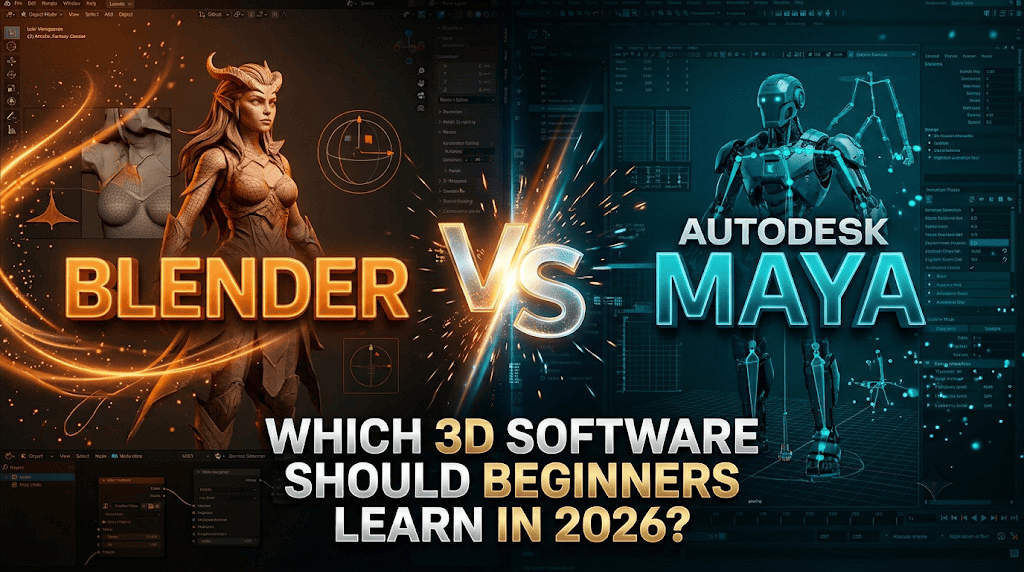
Blender vs. Autodesk Maya: Which 3D Software Should Beginners Learn in 2026?
Getting into the field of 3D animation, game design, and visual effects (VFX) means gaining experience with some very advanced software.
Read Article
Reliance Animation Academy Ludhiana provides professional training in Animation, VFX, Graphic Designing, Video Editing, and Web Development with industry-level practical learning.
Mon-Fri from 9:30am to 7pm
We typically reply within 24 hours


In any animation film or movie that one watches, all the actions in it are always planned out well. The character performs as expected, the view in which it is done being proper and everything fits well with others. But then the big question is; how do animators have the idea of the scene that should come out when not yet animated?
That is where storyboard comes in play.
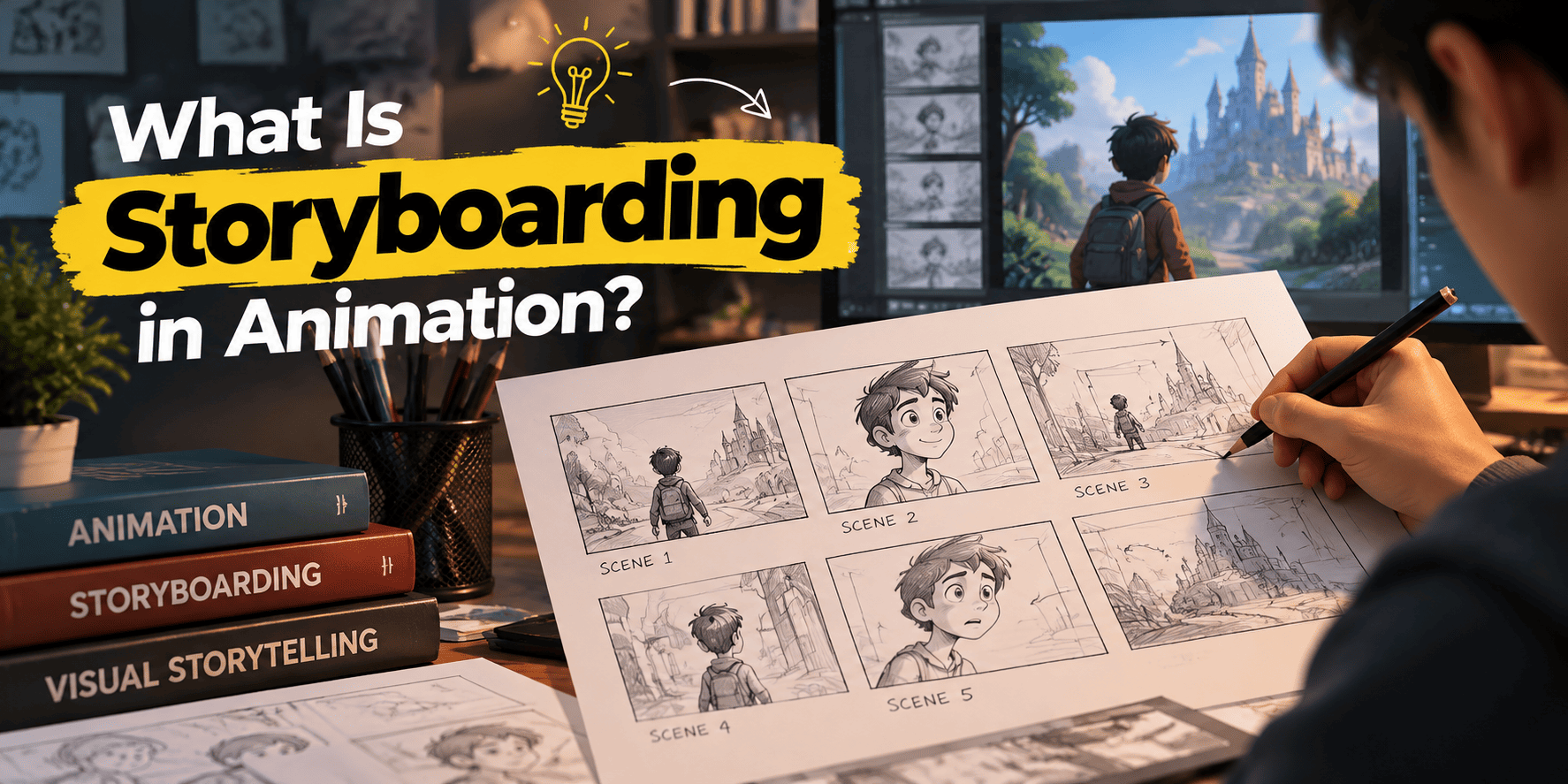
Storyboarding is the act of planning a story in which the depiction of how a story will turn out after being animated. It is through drawings which explain the various activities of the character in different scenes.
It is important for every learner wishing to be in animation to learn storyboarding.
A storyboard can be described as a visual form of the script.
Instead of merely being told that the character entered the room, looked around and found something strange, a storyboard will show this sequence in a series of panels.
Each panel represents an important visual moment in the scene. It may show:
A storyboard does not need to look like a finished animation. Its main purpose is to make the idea clear to everyone working on the project.
Animation requires time. The development of characters, backgrounds, movements, and special effects may take a great deal of time. If the scene does not work after it has been animated, any changes that need to be made might prove costly and complicated.
Storyboarding helps the animator spot these problems early.
Before starting the animation process, the artist can analyze the proposed sequence and raise basic questions:
Does the scene make sense?
Is it clear what is happening?
Is the camera focused on the right thing?
Is the story progressing smoothly from one shot to another?
If there is a problem, it can be fixed during the storyboard stage.
Storyboards begin to appear after the story or script has already been written.
The storyboard artist will separate the story into scenes and moments. These scenes and moments will then be illustrated through sketches.
For instance, let us consider a situation where a student goes into the classroom and discovers that something is missing.
The storyboard might show:
Panel 1: The student enters the classroom.
Panel 2: The student looks around.
Panel 3: The student notices an empty desk.
Panel 4: A close-up shows the student's surprised expression.
These simple panels help the animation team understand how the scene should be presented to the audience.
The storyboard is not the final animation.
Consider it to be a visual blueprint of the scene. The storyboard helps in deciding what the audience sees before the animator creates the final animation.
Once the storyboarding process is completed, it may be helpful for other production processes such as character animation, camera work, background work, special effects, and editing.
Storyboarding is even more helpful when there are more than one person working on an animation.
Not necessarily.
A storyboard doesn’t need to be an elaborate or perfect sketch. The important thing is that the sketch conveys the action or visual idea.
But a strong grasp of drawing, perspective, composition, expressions, and body language will certainly help with storyboarding.
Through practice, students can learn to convey a whole scene through a few simple sketches.
Storyboards are useful in both 2D and 3D animation.
For 2D animations, storyboards can aid in planning the poses, expressions, background, and camera movements of the characters.
For 3D animations, storyboards can help the team figure out where to place the cameras, how to move the characters, their surroundings, as well as their entire composition.
The medium used may vary, but the core concept remains the same - to lay out the vision for the scene before its production.
If you want to develop storyboarding skills, some useful areas to work on include:
It is not necessary that you must know all things right away. This is achieved through continuous practice and the study of how things are done in film or animation scenes.
Storyboarding is one of the many skills involved in transforming ideas into visual concepts. For students who are interested in getting into the field of animation, VFX, film making and more, storyboarding may form an integral part of their education.
Reliance Animation Academy Ludhiana offers industry-oriented programs in animation, VFX, filmmaking, gaming and related creative fields, with practical learning and project-based training.
Knowing everything about the process of animation from the beginning up to creating the first picture helps you when entering into the field of animation as a career option.
Storyboarding is a means of developing visual sequences to design how an animated shot or story should be represented.
It makes planning and problem-solving in animation scenes easier and ensures that the team is visualizing the storyline in their minds.
No. The storyboard only requires clarity in communicating the scene. Even rough drawings would suffice as long as the intended action and visuals are clear.
Sure. In 3D animation, storyboard is often used for planning out the scenes, camera shots, action of characters, etc.
Yes. Beginners can learn storyboarding through regular practice of drawing, composition, camera angles, and visual storytelling.
Getting into the field of 3D animation, game design, and visual effects (VFX) means gaining experience with some very advanced software.
Read Article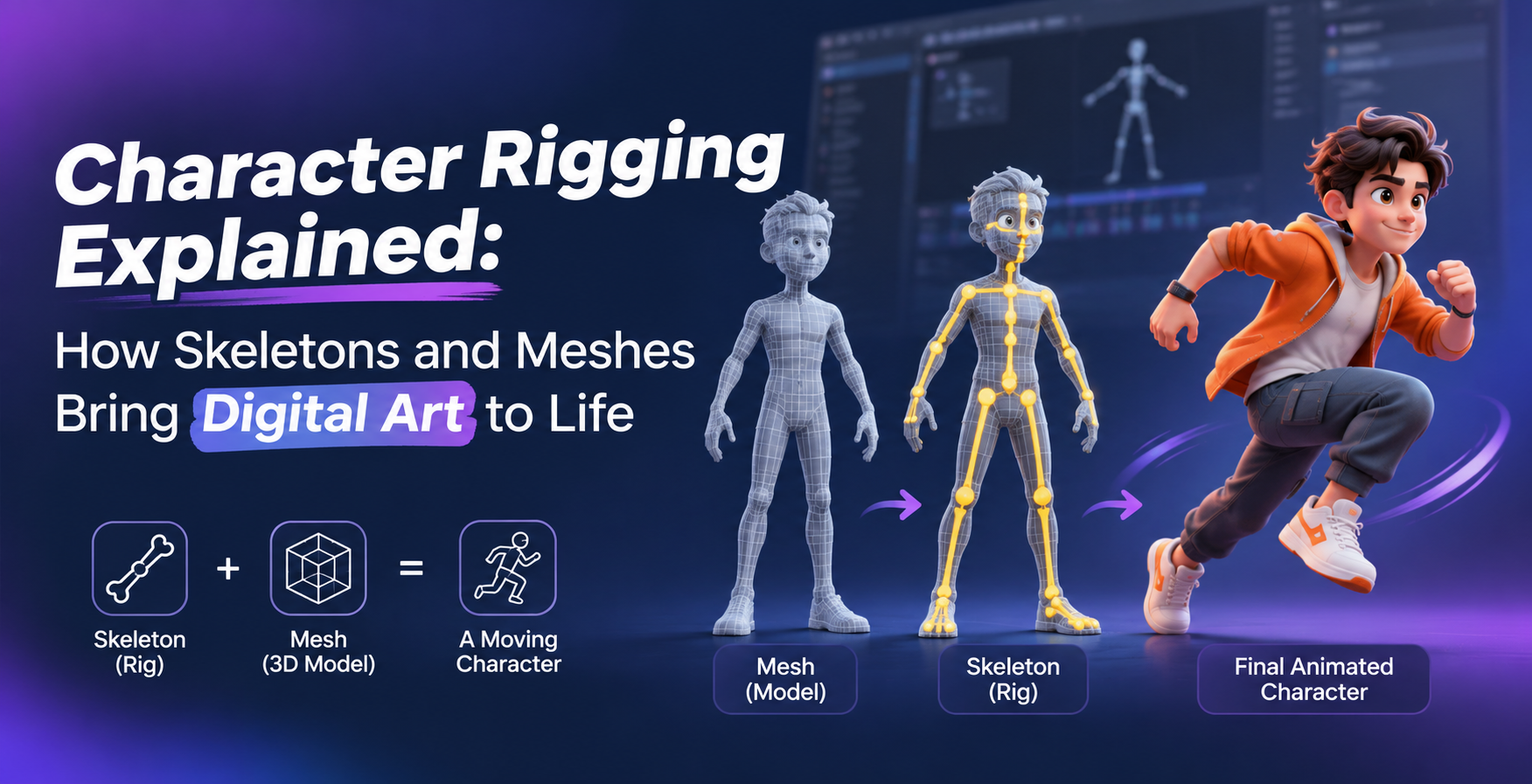
Discover the magic behind 3D movement. Learn how character rigging connects digital skeletons and meshes to bring animated models to life on screen.
Read Article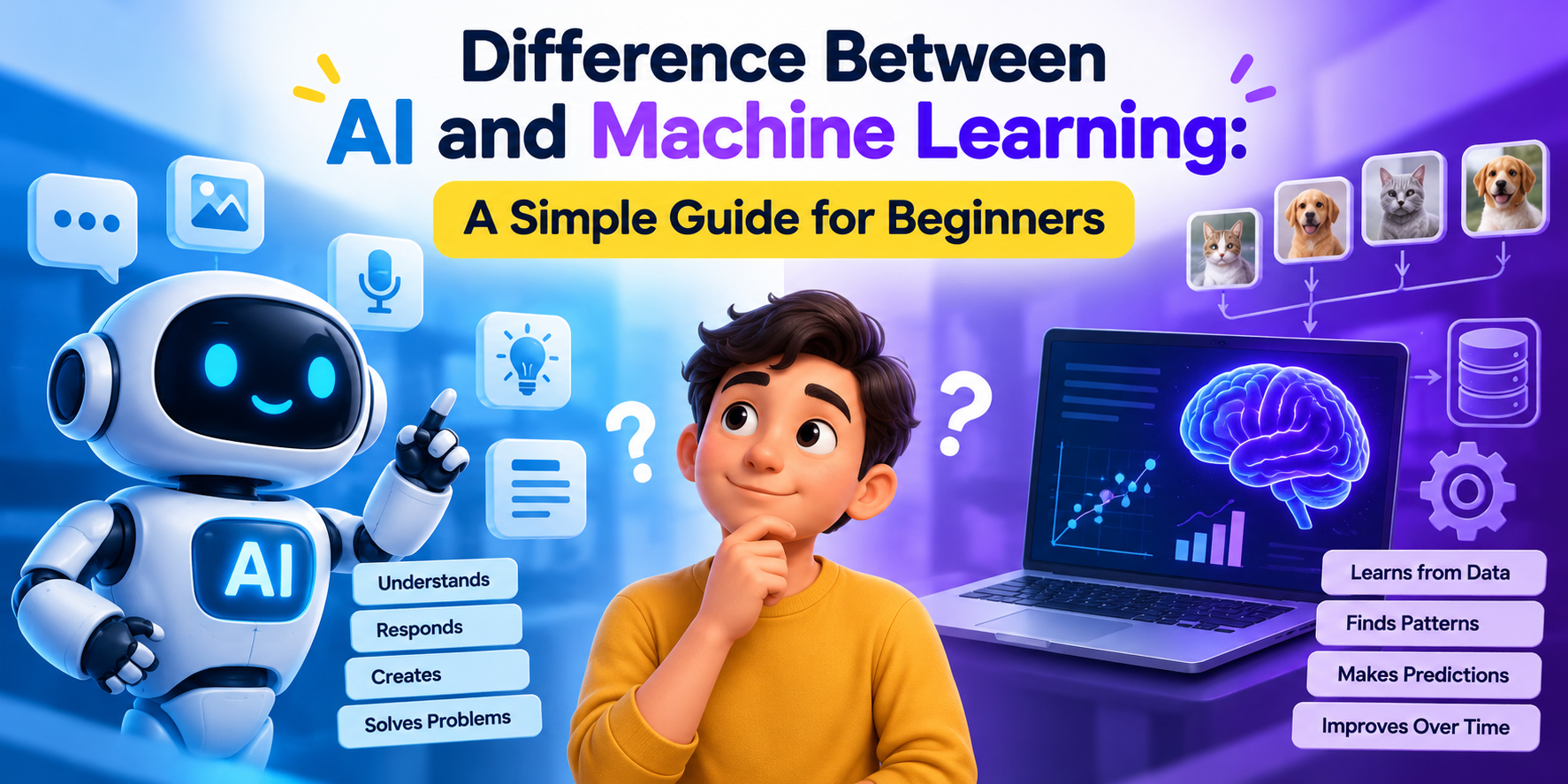
Understand the difference between AI and Machine Learning with simple examples. Explore how AI, ML and Generative AI are changing creative industries.
Read Article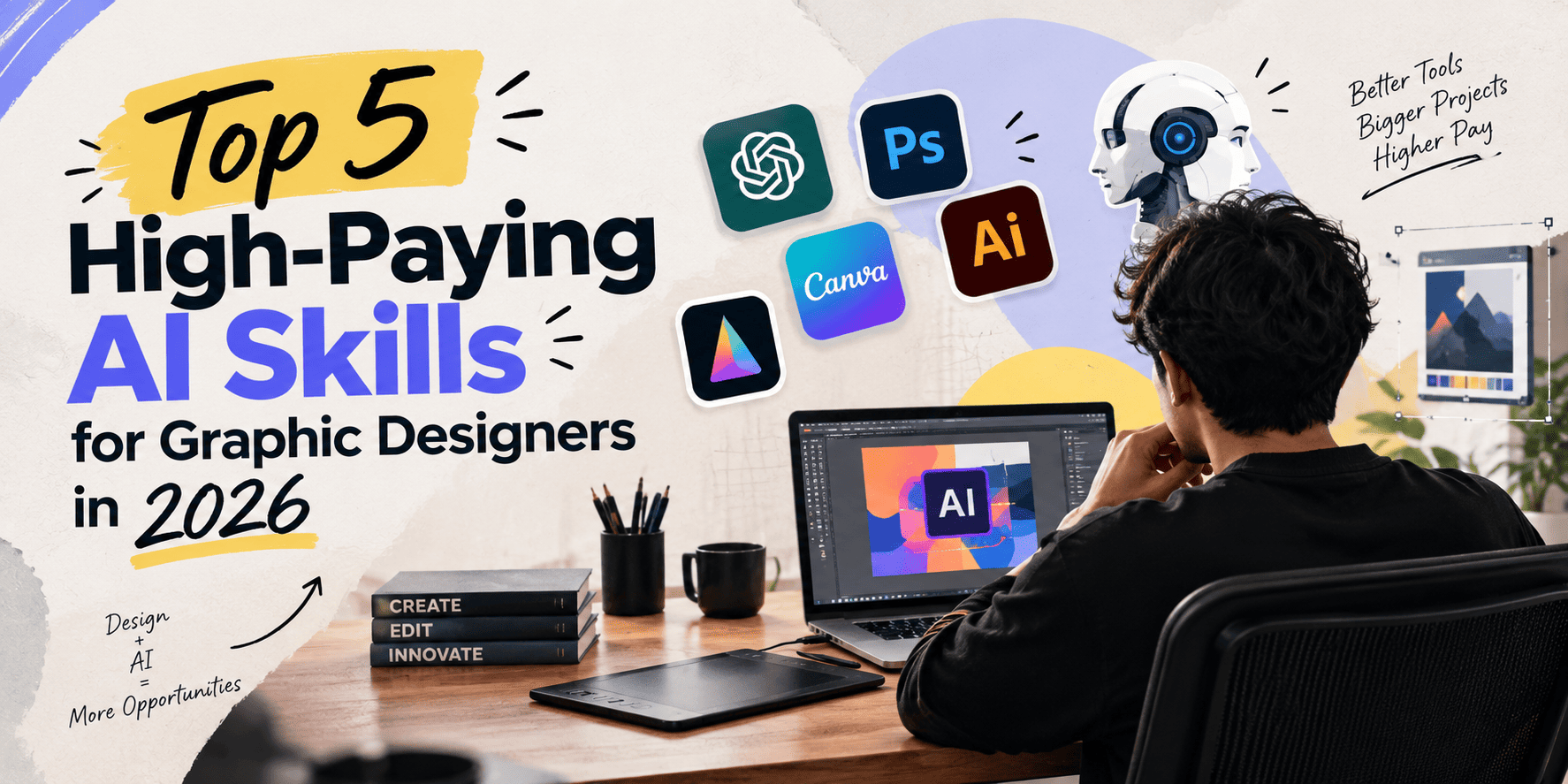
Discover 5 valuable AI skills for graphic designers in 2026, from prompt engineering to AI video creation, and explore a Generative AI course in Ludhiana.
Read Article
Learn how to choose the right digital marketing course in Ludhiana. Compare syllabus, practical training, fees, tools and career opportunities.
Read Article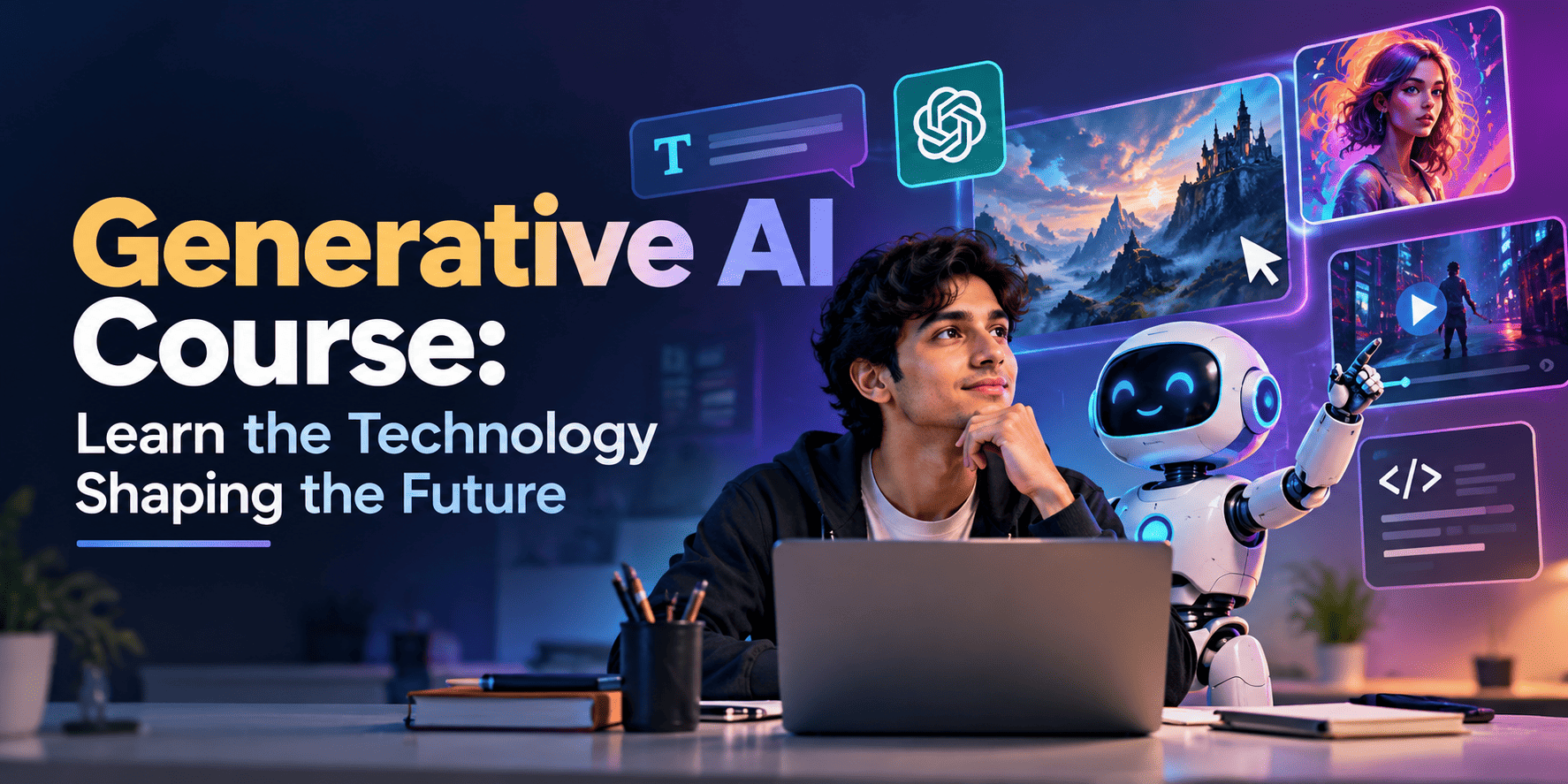
Explore Generative AI, its applications, essential skills and career options. Learn how to choose a Generative AI course in Ludhiana.
Read Article