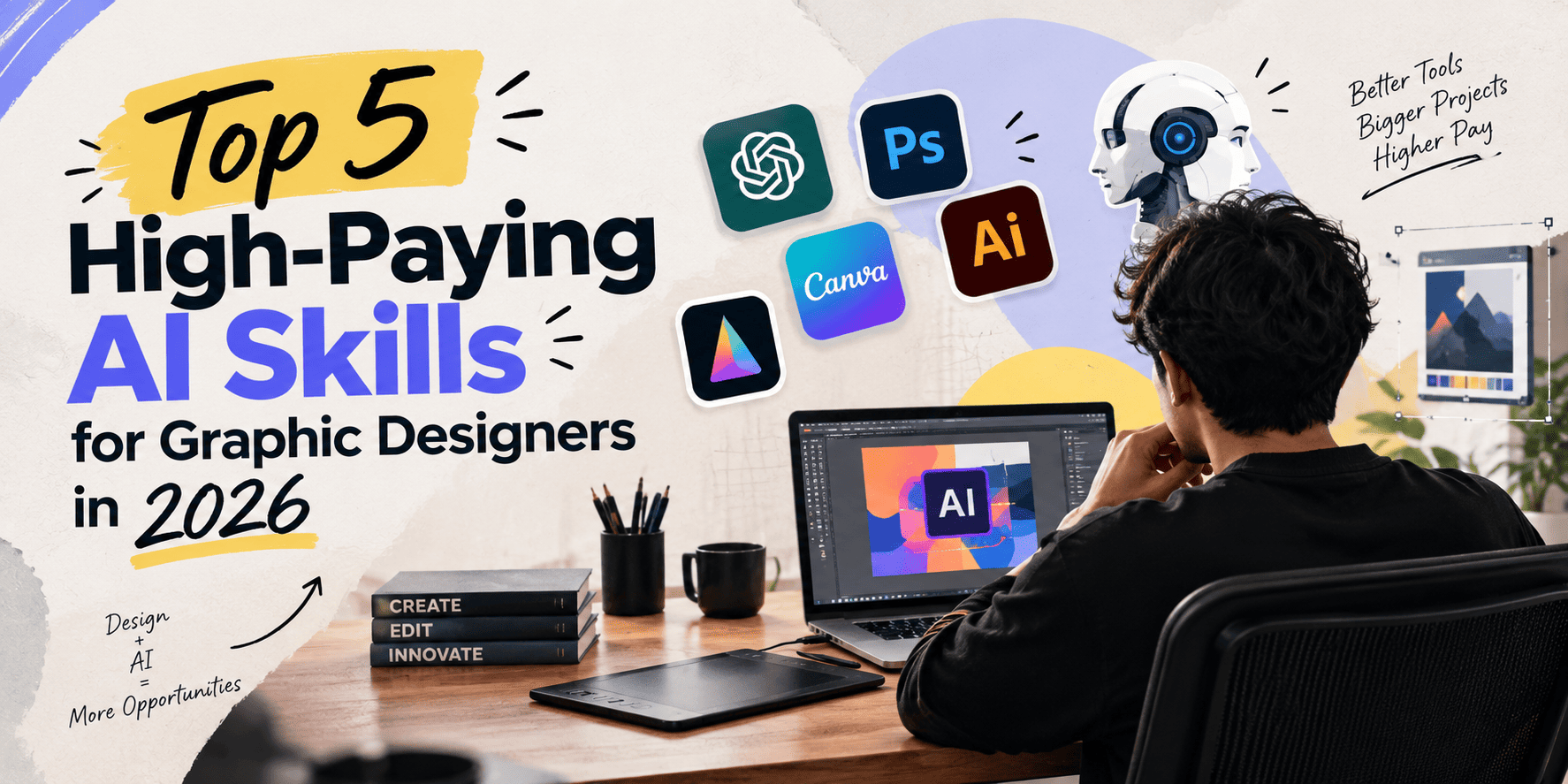
Top 5 High-Paying AI Skills for Graphic Designers in 2026
Discover 5 valuable AI skills for graphic designers in 2026, from prompt engineering to AI video creation, and explore a Generative AI course in Ludhiana.
Read Article
Reliance Animation Academy Ludhiana provides professional training in Animation, VFX, Graphic Designing, Video Editing, and Web Development with industry-level practical learning.
Mon-Fri from 9am to 6pm
We typically reply within 24 hours


The world is going through a revolution as technology is influencing how we live, work and learn. From mobile phones and virtual assistants to photo editing software and autonomous vehicles, artificial intelligence (AI) has become a part of our lives.
However, there is another term that comes along whenever someone talks about artificial intelligence (AI), that is 'Machine Learning'. People consider these two as the same concept, especially those who are new to them.
Then what is the difference between AI and machine learning? Let us find out.
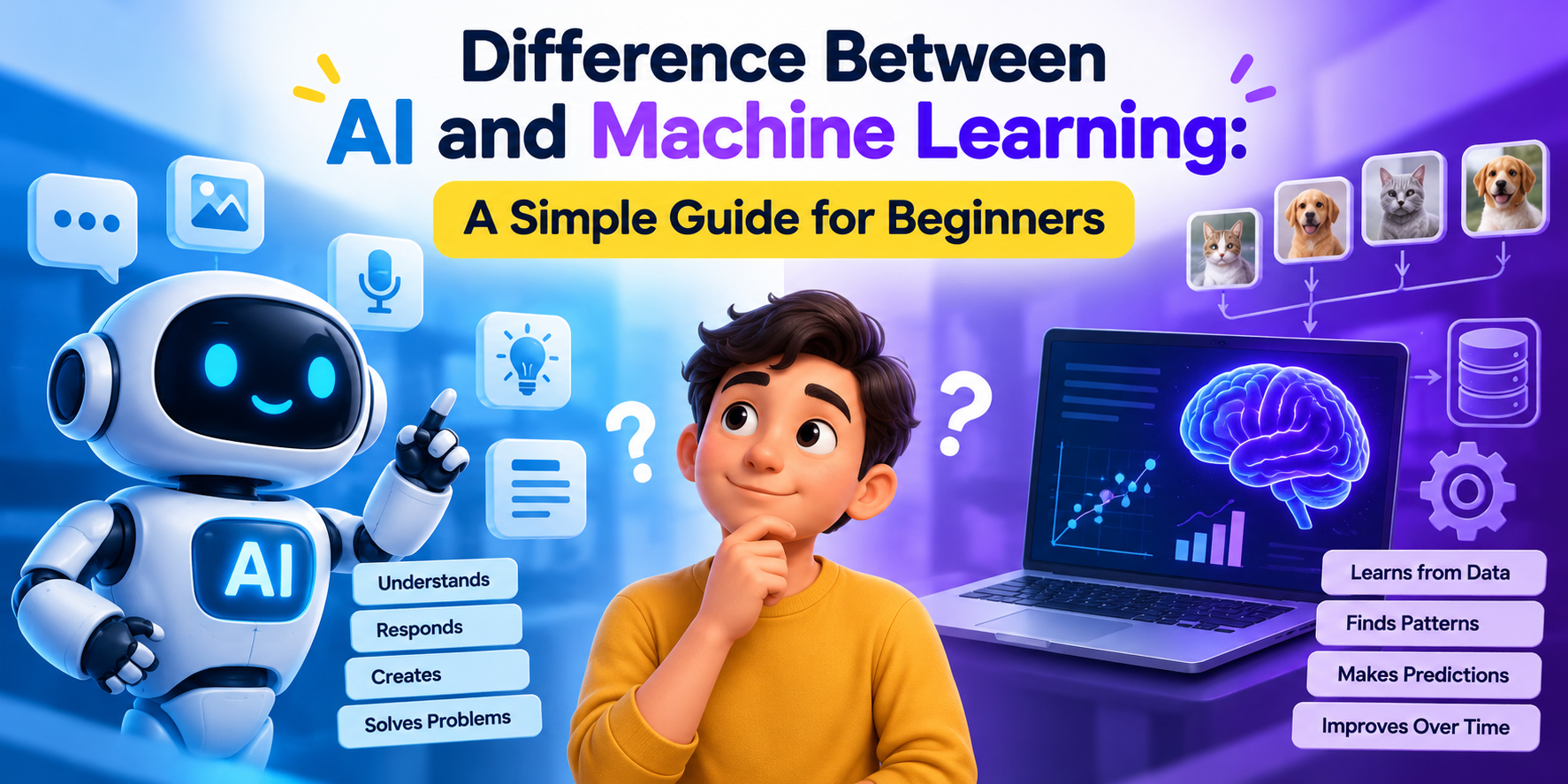
Artificial Intelligence or AI, as it is more popularly known, is a technology which enables the computer or machine to do things that normally need human intelligence.
One good example is the mobile phone that understands what you say when you want it to play a song. The phone understands what you have asked for and gives you the appropriate response.
AI can help machines perform tasks such as:
In simple words, AI helps machines perform tasks in a smart way.
To understand the concept in more detail, you can explore this Artificial Intelligence explanation on Wikipedia.
Machine Learning is one branch of Artificial Intelligence that assists in making machines capable of learning from data and improving themselves without programming for each situation separately.
This concept can be understood with the help of an easy example.
For instance, if you give a child 100 images of cats and dogs, he learns how cats and dogs are different from each other.
The same concept applies to Machine Learning where a computer studies large amounts of data and makes predictions on the basis of it.
Some common examples of Machine Learning include:
In simple words, Machine Learning allows computers to learn from examples and data.
You can also read the Machine Learning overview on Wikipedia to explore this technology further.
The major distinction lies in the fact that Artificial Intelligence is the general term, whereas Machine Learning is the technique through which intelligence can be created.
Here are some simple differences:
Artificial Intelligence (AI):
Machine Learning (ML):
As an illustration, an AI application can assist a computer in comprehending and answering a question. Through the use of Machine Learning, that AI application can learn to answer questions better.
Artificial Intelligence could be imagined like a giant umbrella under which there are many kinds of technologies, such as Machine Learning.
Machine Learning and Artificial Intelligence are not separate terms. Machine learning can be considered to be a part of AI which helps the computer learn through knowledge.
Deep Learning could be seen as yet another technology related to AI which uses neural networks to learn through big data.
Students who want to understand the technical side can explore the Google Machine Learning Crash Course, which offers educational lessons and practical exercises.
Maybe you have heard of the tools which can produce pictures, texts, videos, and even give answers to some queries. Such tools utilize a technology called Generative AI.
Generative AI is an AI technology which produces content according to the specifications provided by its users.
For example:
Generative AI is also becoming useful in creative industries such as animation, graphic design, video editing and digital marketing.
People interested in learning these skills can explore the Certificate Program in Generative AI at Reliance Animation Academy.
Artificial Intelligence is opening up possibilities for those who work in animation and digital media.
In the past, most creative processes involved a lot of time and effort. However, with the help of AI tools, artists and designers can now perform some of these processes faster.
Some examples include:
However, AI does not replace the importance of human creativity. Artists still need imagination, design knowledge and storytelling skills to create meaningful work.
Students interested in building creative skills can also explore the Animation and Gaming Courses at Reliance Animation Academy.
As more industries start using Artificial Intelligence, people with relevant technical and creative skills can explore different career opportunities.
Some areas include:
The right career path depends on your interests, education and skills. People interested in programming and mathematics may explore Machine Learning, while creative learners may explore Generative AI tools for designing, animation and content creation.
Artificial intelligence and machine learning are two distinct branches of science but are closely related. AI is a broad branch where machines are capable of carrying out intelligent tasks, while machine learning is where computers learn from data and improve themselves.
These two branches of science are transforming the way we live and solving our problems. Knowing the basics of these fields will definitely be a good start for people who want to know about modern technology.
For people who are keen to know the applications of AI in creative activities, Generative AI would be a good starting point.
1. Is AI and Machine Learning the same?
No. AI is a field of technology while Machine Learning is one of the many subfields that allows computer systems to learn from the data.
2. Is Machine Learning a subfield of Artificial Intelligence?
Yes. Machine Learning is one of the many subfields of Artificial Intelligence.
3. What is the main difference between AI and ML?
AI is more concerned about making the machines perform intelligent operations while ML is more interested in making machines learn patterns from the data and make predictions.
4. Is ChatGPT an AI or Machine Learning?
ChatGPT is an AI system that uses the machine learning algorithms, including the deep learning, to understand and generate human-like responses.
5. Can beginners learn Generative AI?
Yes. Beginners can learn Generative AI without knowing any complex technical skills.
Discover 5 valuable AI skills for graphic designers in 2026, from prompt engineering to AI video creation, and explore a Generative AI course in Ludhiana.
Read Article
Learn how to choose the right digital marketing course in Ludhiana. Compare syllabus, practical training, fees, tools and career opportunities.
Read Article
Explore Generative AI, its applications, essential skills and career options. Learn how to choose a Generative AI course in Ludhiana.
Read Article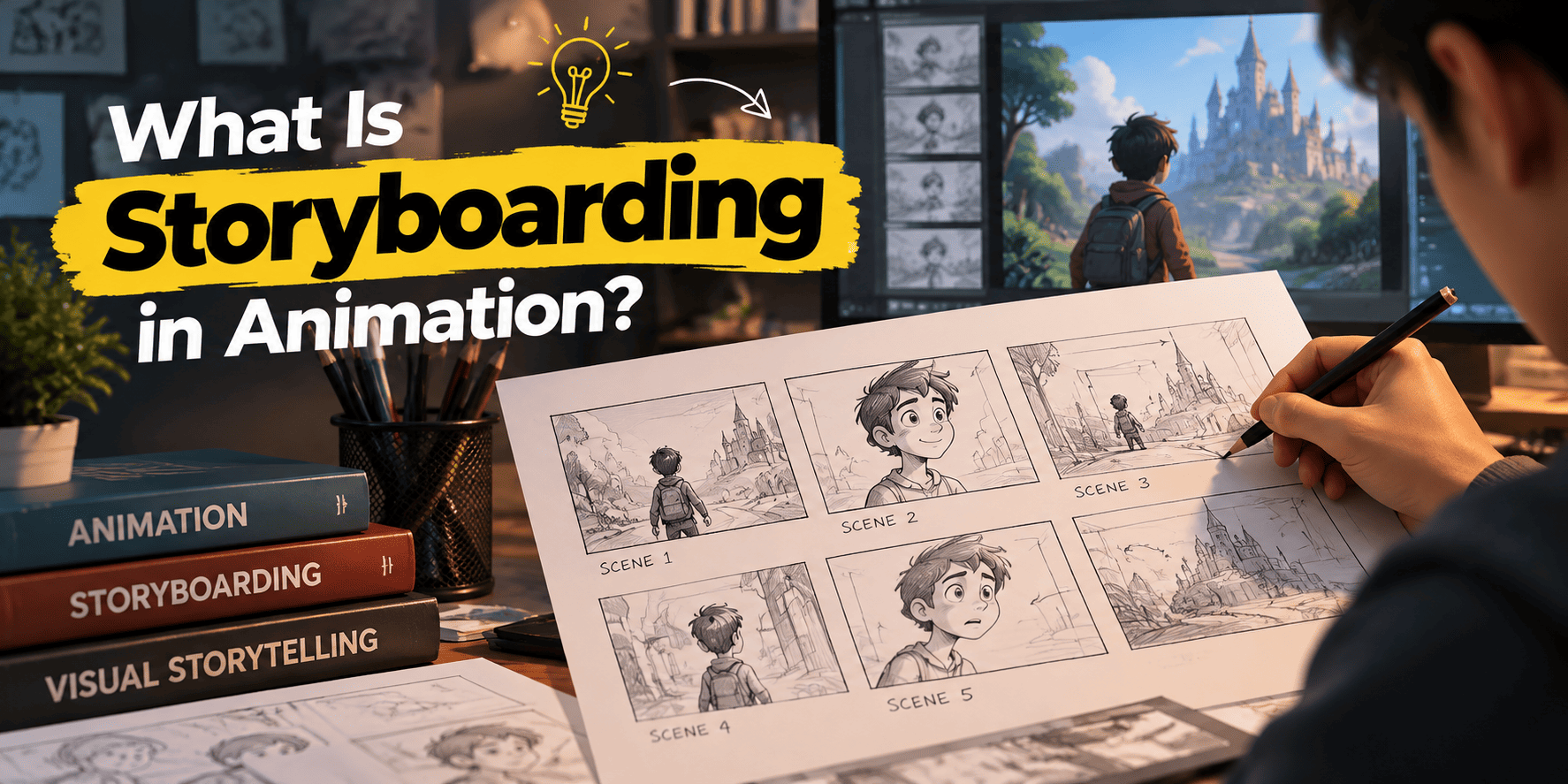
Learn what storyboarding in animation is, why it matters, and how storyboards help plan scenes, characters, and camera angles.
Read Article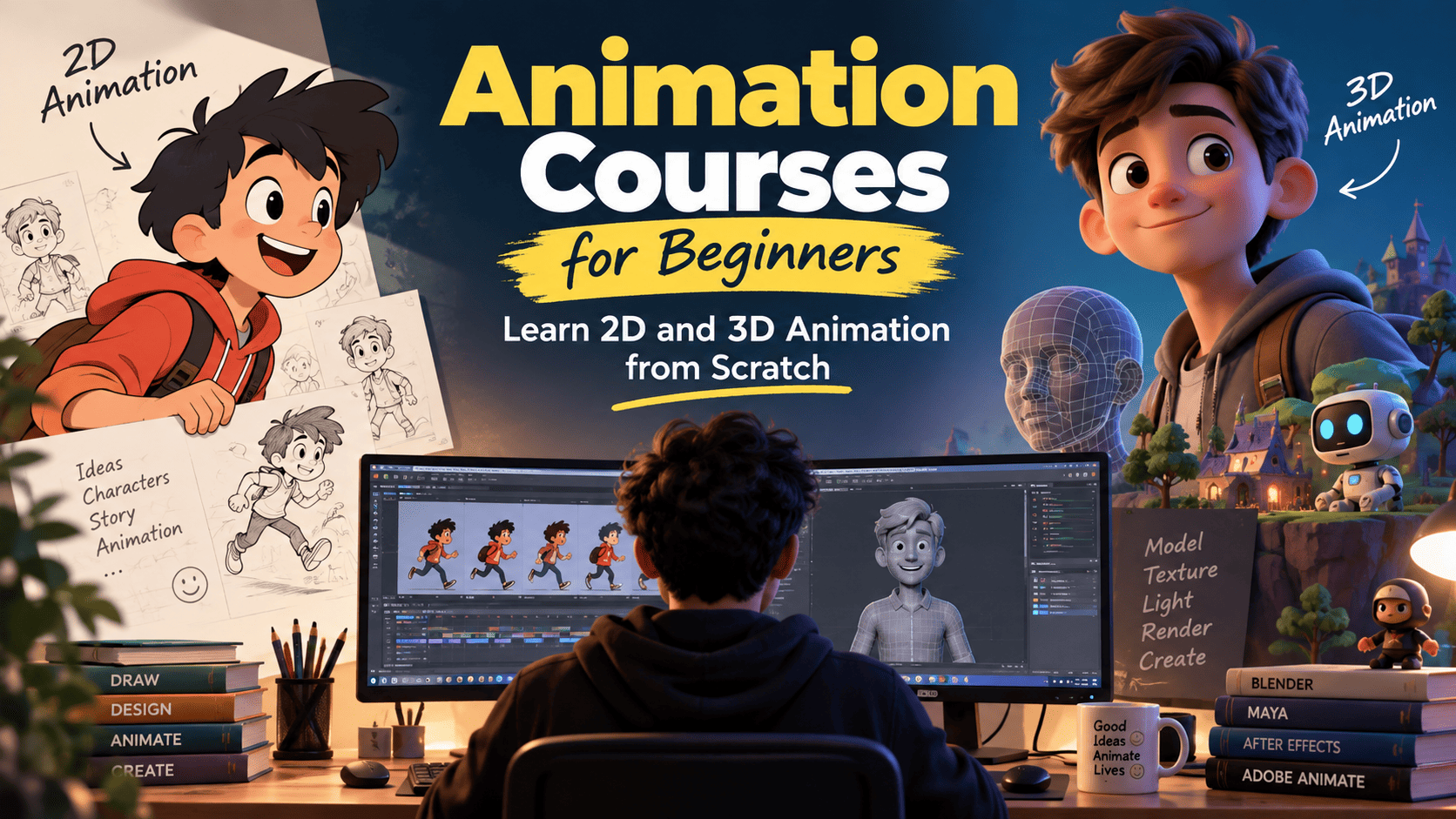
Animation courses for beginners are a great way to learn the fundamentals of both 2D and 3D animation. Students can learn animation principles, character design, storyboarding, modelling, lighting, rendering and industry-relevant software. With regular practice and practical projects, beginners can build a portfolio and explore careers in animation, VFX, gaming, motion graphics and multimedia.
Read Article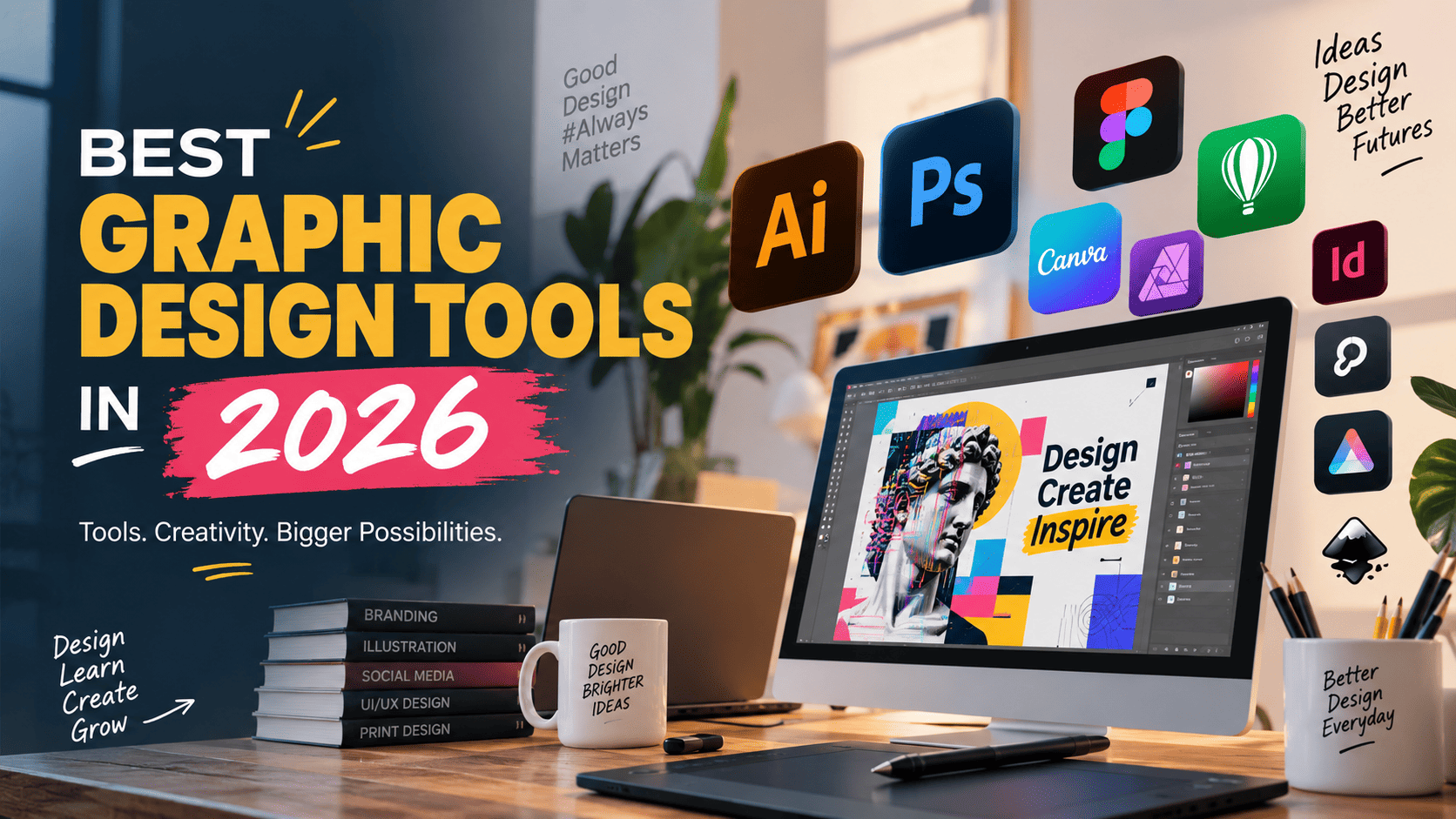
Discover the top 10 graphic & vector design software for 2026. Learn industry-relevant tools with expert training at Reliance Animation Academy, Ludhiana.
Read Article